
Better Hearing Blog

WHO Says
The World Health Organization (WHO) recently declared that the single largest cause of preventable hearing loss is exposure to loud noise, such as that associated with loud music and...

Going in the Right Direction
One of the most helpful features in hearing instruments involves the use of “directional microphones”, which effectively improve speech understanding amid background noise. In their...

Poor Hearing Raises the Risk of Falling.
The Centers for Disease Control and Prevention (CDC) reports that one in every three people over the age of 65 falls each year, and that one out of five falls results in serious...

Not all Eyes and Ears
It is a mistake for new users of hearing instruments to think that they will immediately restore their hearing to a natural level much in the way that prescription eyeglass lenses...

Distance Cousins
We know that the senses work together in ways that help our brains discern what is going on around us. For instance, the eyes and ears often work in tandem to help us calculate the...
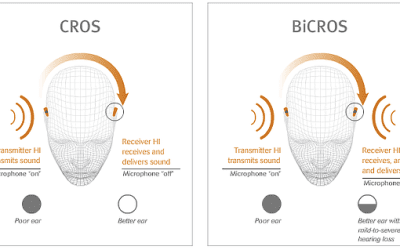
From One Side to the Other
The hearing-instrument technology known as Contralateral Routing of Signal (CROS) is designed for individuals with unilateral (one-sided) hearing. This feature utilizes a microphone...

Good News, Better News
While children with mild to severe hearing loss are challenged with poorer language development than their hearing peers, fitting these youngsters with hearing instruments helps them...

Noise Affects Some More Than Others
While the best way to prevent hearing loss is to limit exposure to loud noise, researchers are beginning to find that some people may be more prone to noise-induced “sensorineural”...
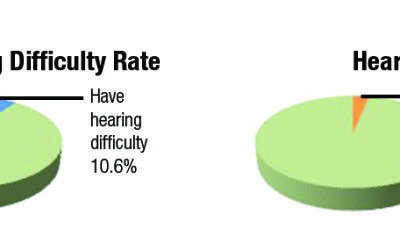
Positive Feedback
If you are considering the use of a hearing instrument, you might be interested in what other consumers have to say about their experiences. According to the latest MarkeTrak survey...